
Placing a purchase order with an overseas factory is easy. Making sure that factory actually delivers what was promised — on spec, on time, and without hidden defects — is where most sourcing relationships succeed or fail.
For buyers moving components, equipment, or building materials across borders, quality control isn’t a final checkpoint before shipment; it’s a discipline that has to run through the entire production cycle.
Here’s how experienced sourcing teams structure that process, and where first-time importers most often get caught out.
Why Quality Control Can’t Be an Afterthought
It’s tempting to treat inspection as a single event: goods are finished, someone checks a sample, the container ships.
In practice, defects introduced early in production are far more expensive to catch late. A wiring fault in an industrial machine, an inconsistent panel efficiency rating in a batch of solar modules, or a dimensional tolerance issue in prefabricated housing components can all trace back to decisions made in the first days of a production run — long before anyone thinks to schedule an inspection.
Buyers who wait until the goods are boxed and palletized to ask questions have already lost the cheapest window to fix a problem. The earlier an issue is identified, the less it costs to correct — in rework, in schedule delays, and in the relationship with the supplier.
A Three-Stage Inspection Framework
Most reliable sourcing programs build quality control around three checkpoints rather than one:
1. Pre-Production Inspection
Before the main production run begins, raw materials, components, and the factory’s understanding of your specification are verified.
This is the moment to confirm that the steel grade, the solar cell supplier, or the housing panel core material actually matches what was agreed — not an approximate substitute the factory considers “close enough.”
2. In-Line (During Production) Inspection
Spot-checking the process while it’s running lets you catch systemic issues — a miscalibrated machine, a process step being skipped under time pressure — while there’s still time to correct course without scrapping finished inventory.
For longer production runs, this stage is often the difference between catching a defect in 5% of units versus discovering it in 100% of them after the fact.
3. Pre-Shipment Inspection
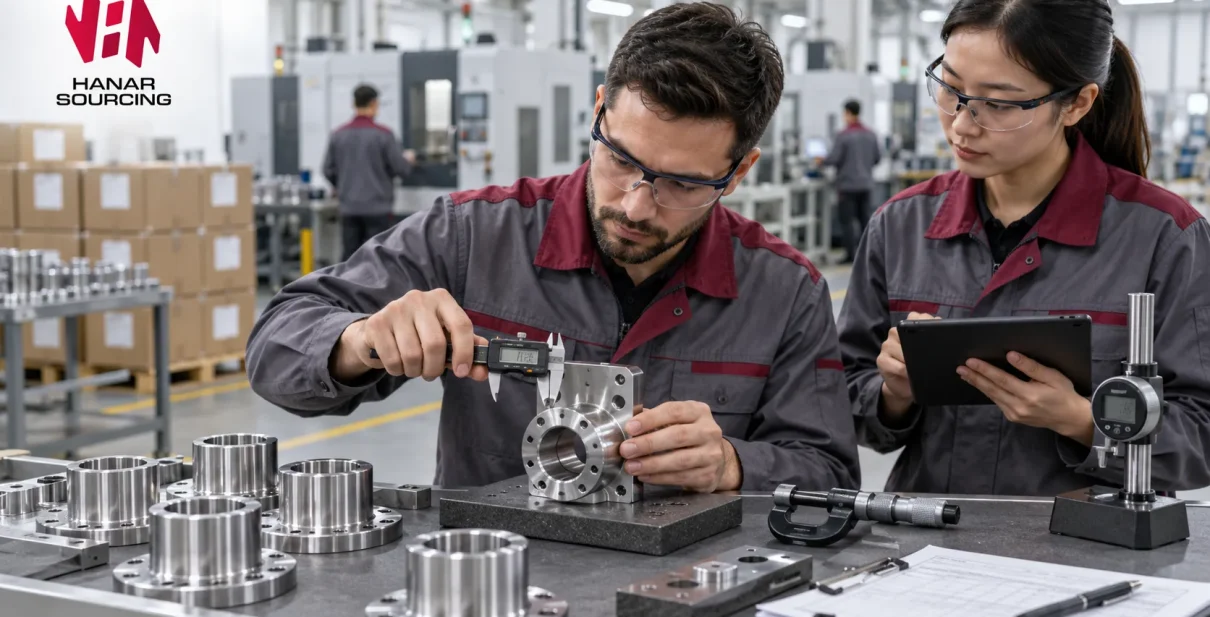
The final check is typically performed on a statistically representative sample of the finished, packed goods.
This is where functional testing, visual defect checks, packaging integrity, and documentation — including certificates, test reports, and labeling — are verified against contract terms before the goods ever leave the factory gate.
Common Red Flags During Factory Audits
Beyond product-specific checks, a factory audit should also assess whether a supplier is structurally capable of delivering consistent quality at scale.
Some warning signs worth watching for include:
- Missing or inconsistent quality-control records: A factory that cannot produce clear, consistent records of its own quality checks may not have a reliable quality-control process in place.
Building QC Into Your Sourcing Process From Day One
The strongest position a buyer can be in is one where inspection criteria, acceptable quality limits, and inspection timing are written into the supplier agreement before production starts — not negotiated after a problem surfaces.
Clear specifications, agreed sampling standards such as AQL (Acceptable Quality Limit) levels appropriate to the product category, and a defined process for handling non-conformance all reduce ambiguity and give both sides a shared standard to work against.
For buyers managing solar and energy components, industrial machinery, or modular housing materials, this matters even more. These are categories where a defect often isn’t visible until the product is installed and operating under load, by which point the cost of failure has multiplied well beyond the original unit price.
Get Expert Eyes on Your Next Order
Quality control is easiest to get right when it’s built into your sourcing process from the very first supplier conversation — not bolted on after a shipment arrives with problems.
If you’re evaluating new manufacturing partners or preparing your next purchase order, Hanar Sourcing’s team can help structure inspections, vet factories, and manage the process end to end.
Visit our Start Sourcing portal to tell us what you’re looking to source, and we’ll help you build a quality control plan around it from day one.